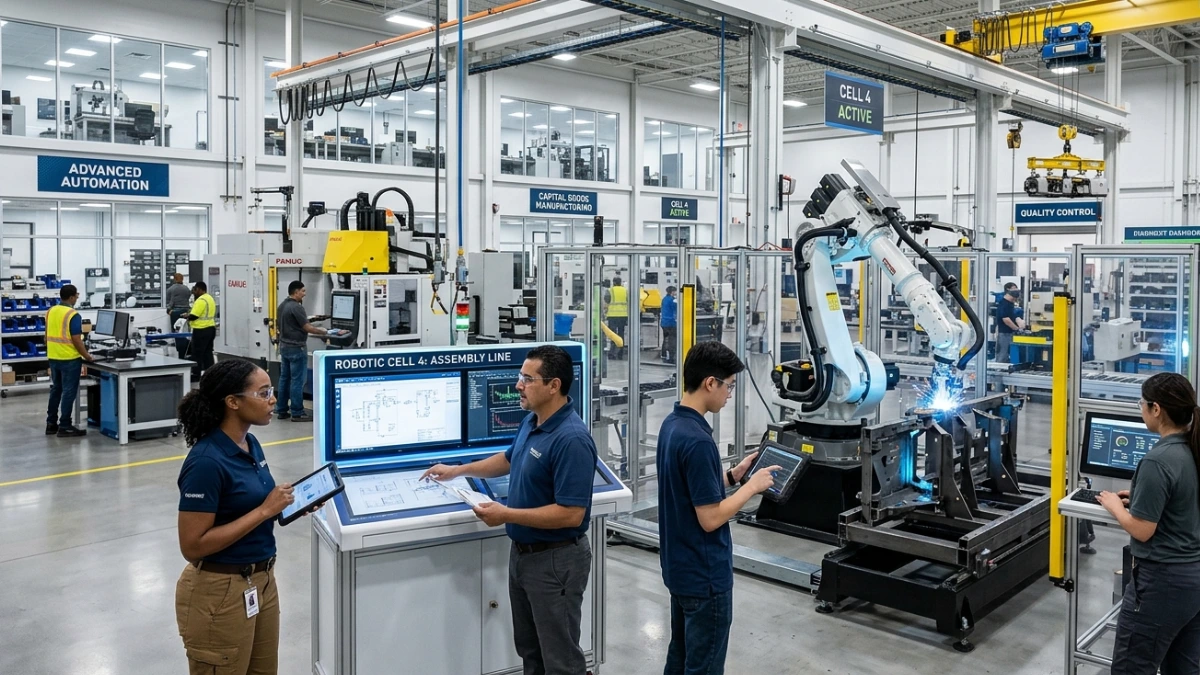
If you’ve been scanning job boards lately and wondering what do capital goods jobs pay, you’re not alone. With rising living costs and fierce competition in the job market USA, more professionals are looking beyond traditional roles and exploring industries that offer real financial stability—and capital goods is one of them.
This sector quietly powers the economy, from manufacturing equipment to aerospace systems. Yet, many job seekers overlook it simply because they don’t fully understand the earning potential or career paths available.
Let’s break it down in a way that actually helps you make smarter career decisions.
Why Capital Goods Careers Are Gaining Attention in the USA
The capital goods industry includes companies that produce machinery, tools, and equipment used by other businesses. Think construction equipment, robotics, factory machinery, and even defense systems.
Here’s why it’s becoming attractive:
- Strong demand due to infrastructure and manufacturing growth
- Less saturation compared to tech or marketing jobs
- Higher-than-average salaries for skilled roles
According to hiring trends observed on platforms like LinkedIn and Indeed, there’s been steady growth in engineering, operations, and technical roles tied to capital goods—especially in states like Texas, Ohio, and Michigan.
Average Salary Range for Capital Goods Jobs in the USA
Let’s get straight to the numbers—because that’s what most people care about.
Entry-Level Roles
- Production Technician: $45,000 – $60,000/year
- Junior Mechanical Engineer: $60,000 – $75,000/year
Mid-Level Roles
- Industrial Engineer: $75,000 – $95,000/year
- Supply Chain Manager: $80,000 – $110,000/year
Senior-Level Roles
- Project Manager (Manufacturing): $100,000 – $130,000/year
- Engineering Director: $130,000 – $180,000+
Specialized High Paying Jobs in USA (Capital Goods)
- Robotics Engineer: $110,000 – $150,000
- Aerospace Engineer: $120,000 – $170,000
- Automation Specialist: $100,000 – $140,000
On platforms like Glassdoor, professionals consistently report that capital goods salaries are competitive with tech—especially when bonuses and overtime are included.
What Drives Higher Salaries in This Industry?
Not all capital goods jobs pay the same. Your salary depends heavily on a few key factors:
1. Technical Skill Level
Roles requiring engineering, automation, or robotics expertise tend to pay significantly more.
2. Industry Segment
Aerospace and defense companies usually offer higher salaries than general manufacturing firms.
3. Location
States with strong industrial bases (like California, Texas, and Illinois) tend to offer better compensation packages.
4. Certifications & Experience
Certifications like Six Sigma, PMP, or specialized engineering licenses can boost your salary by 10–20%.
Real-Life Example: From Factory Floor to Six Figures
Take Mark, for example—a production technician in Ohio earning $52,000/year. After gaining experience and completing a Six Sigma certification, he transitioned into a process engineering role.
Within 4 years:
- Salary jumped to $92,000
- Added performance bonuses
- Landed a hybrid (partly remote jobs USA) position
This kind of upward mobility is common in capital goods careers—especially if you continuously upskill.
Skills Employers Are Actively Hiring for in 2026
If you’re aiming for high paying jobs in USA within this sector, these skills are in demand:
- Automation and robotics programming
- CAD (Computer-Aided Design) software
- Data analysis for manufacturing optimization
- Supply chain management
- AI integration in industrial systems
Employers on Indeed and LinkedIn increasingly prioritize candidates who combine technical skills with problem-solving ability.
Soft skills also matter:
- Communication
- Project management
- Team collaboration
Are There Remote Jobs or Visa Sponsorship Opportunities?
Traditionally, capital goods jobs required on-site presence. But things are changing.
Remote Jobs USA Trends
- Engineering design roles now offer hybrid options
- Project management positions often allow remote coordination
- Supply chain analytics can be done remotely
Visa Sponsorship Jobs USA
Large companies in aerospace, manufacturing, and energy sectors do offer visa sponsorship—especially for:
- Mechanical engineers
- Electrical engineers
- Robotics specialists
However, competition is high. Employers prioritize candidates with niche expertise or advanced degrees.
Career Growth Path: Where Can This Industry Take You?
One of the biggest advantages of capital goods careers is long-term stability.
Typical growth path:
- Entry-Level Technician or Engineer
- Senior Engineer / Specialist
- Project or Operations Manager
- Director or VP Level
Unlike some industries where growth plateaus, capital goods offers steady progression—especially if you’re willing to adapt to new technologies.
Hidden Opportunities Most Job Seekers Miss
Many people assume capital goods jobs are limited to factory work. That’s a mistake.
Here are overlooked roles:
- Industrial data analyst
- Sustainability engineer (green manufacturing)
- Equipment sales engineer (high commission potential)
- Maintenance optimization specialist
These roles often pay well and are less competitive than mainstream tech jobs.
How to Break Into Capital Goods Careers in the USA
If you’re serious about entering this field, here’s a practical roadmap:
Step 1: Get Relevant Education
- Engineering degree (mechanical, electrical, industrial)
- Or technical certifications for hands-on roles
Step 2: Build Experience
- Internships or apprenticeships
- Entry-level roles in manufacturing
Step 3: Use Job Platforms Strategically
Search on:
- LinkedIn Jobs
- Indeed
- Glassdoor
Use keywords like:
- “automation engineer USA jobs”
- “manufacturing engineer remote jobs USA”
Step 4: Upskill Continuously
Learning tools like CAD, robotics, or data analytics can dramatically increase your earning potential.
Future Outlook: Is This Industry Worth It in 2026 and Beyond?
The future of capital goods looks strong.
Key trends driving growth:
- Infrastructure investment in the USA
- Automation and AI integration
- Shift toward sustainable manufacturing
According to hiring trends USA, companies are actively investing in modernizing production systems—which means more job openings and better salaries.
This makes capital goods one of the more stable career opportunities in USA compared to volatile sectors.
Read More: What Jobs Hire at 14? A Realistic Guide to Early Work Opportunities in the USA
Conclusion
Capital goods careers offer a powerful combination of stability, growth, and strong earning potential. Whether you’re just starting out or looking to switch industries, understanding what do capital goods jobs pay reveals a clear opportunity—especially for those willing to build technical skills and adapt to industry trends.
The salaries are competitive, the demand is steady, and the career paths are diverse. From engineering to management, this sector provides long-term value that many other industries struggle to match.
If you’re serious about building a high-paying, future-proof career, now is the time to explore capital goods roles. Start researching, upskill strategically, and take advantage of platforms like LinkedIn and Indeed to find your next opportunity.
FAQs
1. What is the highest paying job in capital goods?
Roles like aerospace engineers, robotics engineers, and engineering directors can earn $120,000 to $180,000+ annually depending on experience.
2. Are capital goods jobs in demand in the USA?
Yes, demand is growing due to infrastructure projects, automation, and manufacturing expansion across the country.
3. Can I get a capital goods job without a degree?
Yes, many technician and operational roles require certifications or hands-on experience rather than a full degree.
4. Do capital goods jobs offer remote work options?
Some roles, especially in design, analytics, and project management, offer hybrid or remote jobs USA options.
5. Is capital goods a good long-term career choice?
Absolutely. It offers strong job security, career growth, and competitive salary in USA jobs, making it a reliable long-term path.