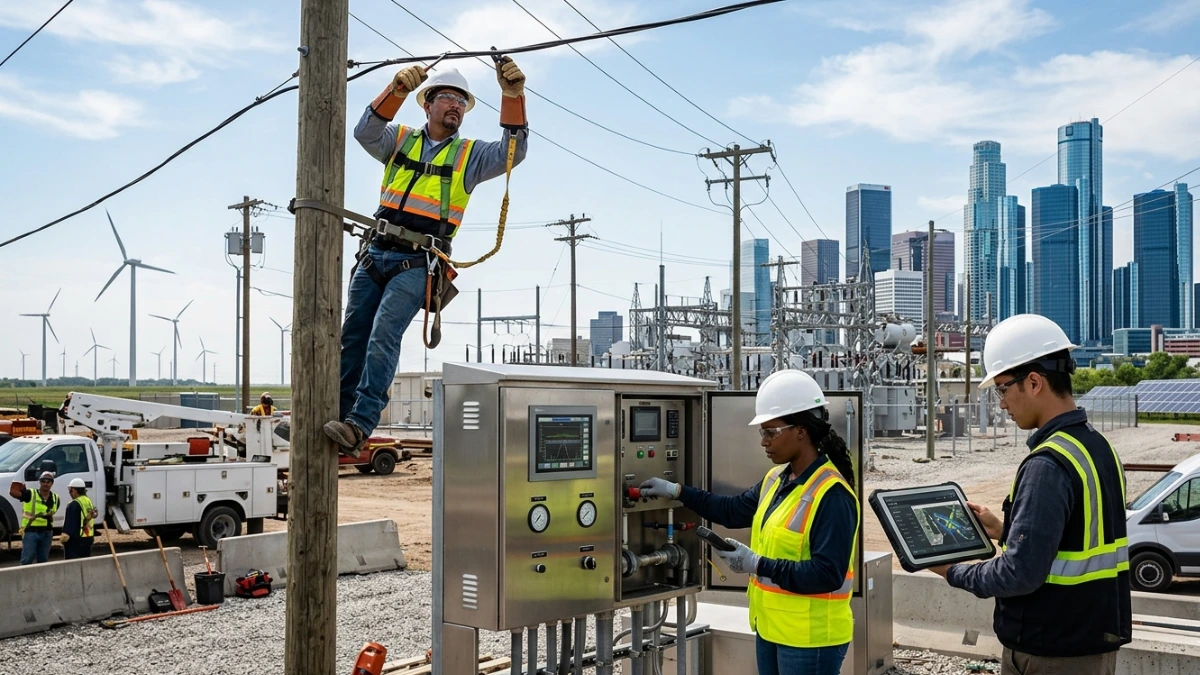
If you’ve been exploring stable career paths lately, you’ve probably asked yourself: how many jobs are available in public utilities—and whether it’s still a reliable industry in today’s shifting job market. With layoffs hitting tech and uncertainty in many sectors, public utilities stand out as one of the most overlooked yet resilient areas for long-term employment in the USA.
The truth is, this sector isn’t just stable—it’s quietly expanding. From electricity and water systems to natural gas and renewable energy infrastructure, public utilities continue to hire across a wide range of roles. And many of these positions don’t require a traditional four-year degree, making them even more accessible.
Let’s break it all down like a real career strategist would.
The Real Size of the Public Utilities Job Market in the USA
Public utilities might not make headlines like tech or finance, but they employ hundreds of thousands of workers across the United States. Based on recent labor trends and job platform data, there are roughly:
- 500,000+ direct jobs in public utilities
- Thousands of new openings posted monthly on platforms like LinkedIn, Indeed, and Glassdoor
- Additional demand driven by infrastructure upgrades and clean energy initiatives
What’s interesting is that many of these jobs are not flooded with applicants. Unlike saturated fields, utilities often struggle to find skilled workers—especially in technical and field-based roles.
That creates a unique opportunity for job seekers looking for stable career opportunities in USA industries.
Why Public Utilities Jobs Are More Secure Than Most USA Jobs
If job security matters to you—and let’s be honest, it matters more than ever—public utilities offer a strong advantage.
These services are essential. Electricity, water, and gas don’t stop being needed during economic downturns. That’s why utility companies continue hiring even when other industries slow down.
According to hiring trends observed on platforms like LinkedIn and Indeed:
- Utility jobs have lower layoff rates compared to tech and retail
- Many roles are backed by government or regulated funding
- Long-term infrastructure projects ensure continuous demand
This stability is why many professionals are shifting from volatile industries into public utilities, especially those seeking high paying jobs in USA with long-term security.
Types of Jobs Available in Public Utilities (And Who They’re For)
One of the biggest misconceptions is that public utilities only offer manual labor jobs. That’s far from the truth.
Here’s a breakdown of major roles:
1. Technical and Field Jobs
- Lineworkers (electricity)
- Water treatment operators
- Gas technicians
These roles are hands-on and often come with strong union support and benefits.
2. Engineering and Skilled Roles
- Electrical engineers
- Environmental engineers
- Systems operators
These positions typically require degrees but offer some of the highest salary in USA jobs within the sector.
3. Administrative and Corporate Roles
- HR specialists
- Finance analysts
- Customer service managers
Yes, even utilities need business professionals.
4. Emerging Green Energy Jobs
- Solar technicians
- Wind turbine technicians
- Energy efficiency consultants
This is where the future lies—and hiring is accelerating fast.
Salary Expectations: Are Public Utility Jobs Worth It?
Let’s talk money—because that’s a big part of career decisions.
Public utilities are known for offering competitive and often above-average salaries, especially when combined with benefits.
Typical salary ranges:
- Entry-level roles: $40,000 – $60,000/year
- Skilled technicians: $60,000 – $90,000/year
- Engineers and specialists: $80,000 – $130,000+
- Senior management: $120,000 – $200,000+
In addition to base salary, many roles include:
- Pension plans
- Health insurance
- Overtime pay
- Union protections
Compared to many remote jobs USA or gig-based roles, utilities offer more predictable and stable income growth.
Skills That Actually Get You Hired in This Industry
This is where many job seekers either succeed or get stuck.
Public utilities value practical, job-ready skills more than flashy resumes.
Here’s what employers consistently look for:
- Technical certifications (electrician, HVAC, water systems)
- Problem-solving ability
- Safety awareness and compliance knowledge
- Basic digital literacy (systems monitoring, reporting tools)
- Strong work ethic and reliability
Interestingly, many roles don’t require a college degree—but they do require training or certifications.
Platforms like Indeed and Glassdoor often highlight certifications as a major hiring filter.
Real-Life Example: A Career Switch That Paid Off
Take Jason, a 32-year-old retail manager from Ohio.
After years in unstable retail jobs, he decided to enroll in a 9-month electrical technician program. Within a year:
- He landed a job with a local utility company
- Started earning $68,000 annually
- Received full benefits and job security
Today, he’s working toward becoming a senior lineworker, which could push his income past $90,000.
This kind of transition is becoming more common as people rethink traditional USA jobs and prioritize stability.
Can International Workers Get Jobs in Public Utilities?
This is where things get a bit complex.
While there are visa sponsorship jobs USA, public utilities are generally more restricted due to:
- Government regulations
- Security concerns
- Licensing requirements
However, there are exceptions:
- Engineering roles in large utility corporations
- Renewable energy companies open to global talent
- Specialized technical roles with shortages
If you’re an international applicant, your best bet is targeting companies involved in renewable energy or infrastructure innovation.
Are There Remote Jobs in Public Utilities?
Unlike tech, most utility jobs are location-based. After all, infrastructure requires physical presence.
That said, some work from home USA jobs do exist in this sector:
- Customer support roles
- Billing and account management
- Data analysis and reporting
- IT and cybersecurity roles
Still, the majority of high-paying roles require on-site work, especially in operations and maintenance.
Future Hiring Trends: Where the Industry Is Headed
The future of public utilities is more exciting than most people realize.
Here’s what’s driving job growth:
1. Clean Energy Expansion
Solar and wind projects are creating thousands of new jobs.
2. Aging Workforce
A large portion of current workers are nearing retirement, opening up opportunities.
3. Infrastructure Modernization
Smart grids, water systems, and energy efficiency upgrades are increasing demand.
According to trends observed on LinkedIn and industry hiring reports:
- Utility jobs are expected to grow steadily over the next decade
- Skilled trades will be in especially high demand
- Green energy roles will see the fastest growth
This makes public utilities one of the most underrated sectors for career opportunities in USA right now.
How to Break Into Public Utilities in 2026
If you’re serious about entering this field, here’s a practical roadmap:
- Identify your path – technical, engineering, or corporate
- Get certified – short-term programs can make a huge difference
- Use job platforms – LinkedIn, Indeed, and Glassdoor are key
- Apply locally – many jobs are region-specific
- Network smartly – utility companies often hire through referrals
Don’t overcomplicate it. This industry values readiness and reliability more than perfect resumes.
Read More: What Jobs Hire at 15? A Realistic Guide to Starting Work Early in the USA
Conclusion: Is Public Utilities a Smart Career Move?
So, how many jobs are available in public utilities? The answer is: more than most people realize—and not enough qualified candidates to fill them.
This sector offers a rare combination of job security, strong salaries, and long-term growth. Whether you’re just starting out or considering a career shift, public utilities can open doors that many other industries simply can’t right now.
The key is to act early. Start building relevant skills, explore certifications, and begin applying through trusted platforms. The demand is there—you just need to position yourself to take advantage of it.
FAQs
1. Are public utilities jobs in demand in the USA?
Yes, demand is steady and growing due to infrastructure upgrades, retirements, and clean energy expansion.
2. Do I need a degree to work in public utilities?
Not always. Many technical roles only require certifications or vocational training.
3. What is the highest paying job in public utilities?
Engineering and senior management roles can exceed $120,000 annually.
4. Are public utilities good for long-term careers?
Absolutely. They offer stability, benefits, and consistent demand compared to many other industries.
5. Can I find entry-level jobs in public utilities easily?
Yes, especially in technician and support roles, though some training or certification may be required.