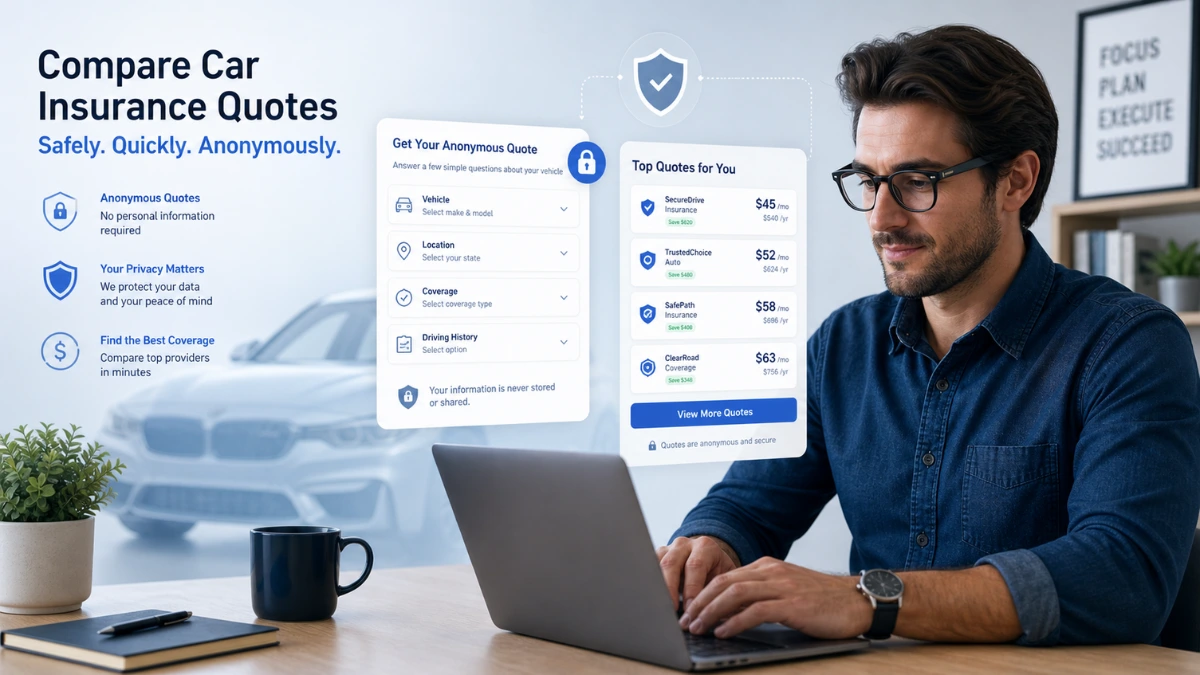
Trying to figure out how to get car insurance quotes without personal information can feel frustrating—especially when every website seems to demand your phone number, email, or even your driver’s license before showing a price. In today’s data-driven world, many Americans are becoming more cautious about sharing personal details online. And if you’re navigating career opportunities in the USA, budgeting for essentials like car insurance becomes even more critical.
Whether you’re a recent graduate, an immigrant exploring visa sponsorship jobs in USA, or someone transitioning into remote jobs USA, understanding how to compare insurance costs without compromising your privacy is a smart financial move.
Why Privacy Concerns Are Rising in the Digital Economy
Over the past decade, the USA job market has become increasingly digital. Platforms like LinkedIn, Indeed, and Glassdoor dominate hiring, networking, and salary research. But with that convenience comes a tradeoff: your data.
The same concern applies when searching for car insurance quotes. Many quote tools collect personal information to generate precise rates, but they also use that data for marketing, follow-ups, and sometimes third-party sharing.
For professionals pursuing high paying jobs in USA or managing tight budgets in entry-level roles, unnecessary spam calls or data exposure is more than annoying—it’s a risk.
How Insurance Companies Calculate Quotes (Without Needing Your Identity First)
Here’s the reality: insurance providers don’t actually need your full identity to give you a rough estimate.
Most car insurance quotes are based on:
- ZIP code
- Age range (not exact birthdate)
- Driving history (general, not specific)
- Vehicle type
- Coverage preferences
By using this generalized data, many platforms can offer “ballpark” quotes without asking for your name, phone number, or Social Security number.
This is especially helpful for people exploring career opportunities in USA who are still planning relocation or budgeting before committing.
Best Ways to Get Anonymous Car Insurance Quotes
Let’s break down practical, real-world methods that professionals in the USA are using today:
1. Use Comparison Tools with Minimal Input
Some insurance comparison platforms allow you to skip personal identifiers. Instead of signing up, you can:
- Enter a ZIP code
- Select a car model
- Choose coverage levels
These tools provide estimates without requiring email or phone verification.
2. Use Incognito Mode or Private Browsing
This doesn’t remove all tracking, but it limits cookies and data storage. Many job seekers—especially those applying for remote jobs USA—use this trick to avoid targeted ads while researching financial tools.
3. Try Insurance Company “Quick Quote” Tools
Some insurers offer simplified quote tools labeled as “quick estimate” or “guest mode.” These typically avoid collecting personal contact info upfront.
4. Use Fake Placeholder Data (Carefully)
Some users input generic or placeholder data (like a non-primary email). While this can work, it’s important not to misrepresent critical details if you later proceed with a policy.
The Hidden Link Between Financial Planning and Career Growth in USA
At first glance, car insurance might seem unrelated to your career. But in reality, it’s deeply connected.
Think about this:
- Many USA jobs require commuting
- Remote jobs USA still require occasional travel
- Insurance costs impact your monthly budget
If you’re earning an entry-level salary in the job market USA, overpaying for insurance can quietly drain your income.
For example:
Case Scenario:
A junior software developer relocating for a visa sponsorship job USA in Texas compared insurance quotes. By using anonymous tools first, he avoided aggressive sales calls and found a plan that saved him $120/month—money he later invested in upskilling courses.
What Hiring Trends in USA Reveal About Financial Awareness
According to hiring trends observed on platforms like LinkedIn and Indeed, employers increasingly value financial literacy as part of overall professionalism.
Why?
Because financially stable employees:
- Make better long-term decisions
- Handle relocation and job transitions smoothly
- Are less stressed and more productive
Understanding how to compare insurance quotes privately reflects a broader skill: smart decision-making.
This is especially important for those targeting high paying jobs in USA or leadership roles.
Common Mistakes People Make When Comparing Insurance Quotes
Even experienced professionals make these errors:
1. Sharing Too Much Information Too Early
Many users enter full details before understanding pricing ranges.
2. Ignoring Coverage Differences
Cheap quotes may exclude important protections like liability or uninsured motorist coverage.
3. Falling for “Too Good to Be True” Rates
Low initial quotes often increase after full verification.
4. Not Comparing Multiple Sources
Relying on a single platform limits your options.
In the USA job market—where salaries vary widely depending on industry and location—every dollar saved matters.
Smart Budgeting for Professionals and Job Seekers in the USA
If you’re navigating career opportunities in USA, especially as a newcomer or early-career professional, budgeting is key.
Here’s a simple framework:
- Allocate 10–15% of income to transportation (including insurance)
- Compare at least 3–5 insurance estimates anonymously first
- Adjust coverage based on job stability and income level
For those in work from home USA jobs, you may even qualify for lower premiums due to reduced driving.
Future Trends: Digital Insurance and Data Privacy in America
The future of insurance in the USA is shifting toward:
- AI-based pricing models
- Usage-based insurance (pay-per-mile)
- Privacy-focused quote tools
As the job market USA becomes more remote and tech-driven, financial services are adapting to match user expectations.
Professionals today expect transparency, speed, and privacy—and insurance companies are starting to respond.
Read More: What Would Happen If Your Car Were Stolen and You Didn’t Have Auto Insurance 2026 Ultimate Guide
FAQs About Getting Car Insurance Quotes Without Personal Information
1. Can I really get accurate quotes without sharing personal details?
You can get reasonably accurate estimates using general information, but final quotes will require verification.
2. Are anonymous quote tools safe to use?
Yes, as long as you use reputable platforms and avoid entering sensitive data unnecessarily.
3. Will skipping personal info affect my final insurance rate?
No, but your final rate may change slightly after full details are provided.
4. Is this approach useful for newcomers to the USA job market?
Absolutely. It helps you budget before relocation, especially if you’re pursuing visa sponsorship jobs USA.
5. Can remote workers in the USA benefit from lower insurance rates?
Yes, many insurers offer discounts for low-mileage drivers, common among remote jobs USA professionals.
Conclusion: Protect Your Data While Making Smarter Financial Decisions
Learning how to get car insurance quotes without personal information isn’t just about avoiding spam—it’s about taking control of your financial decisions in a competitive and fast-moving economy. For anyone navigating the job market USA, especially those pursuing high paying jobs in USA or relocating for new roles, every financial decision counts.
When you approach insurance the same way you approach your career—strategically, cautiously, and informed—you position yourself for long-term stability and success.
Take Action: Build Smarter Habits That Support Your Career Growth
Start today by comparing at least three anonymous insurance quotes before committing. Use that same research mindset when exploring career opportunities in USA—whether it’s analyzing salary in USA jobs, reviewing hiring trends USA, or applying for work from home USA jobs.
The professionals who succeed in today’s market aren’t just skilled—they’re informed, intentional, and proactive.